The Power Platform Developer Cheat Sheet

Howdang Rashid
Saturday, 22 August 2026 · 3 min read
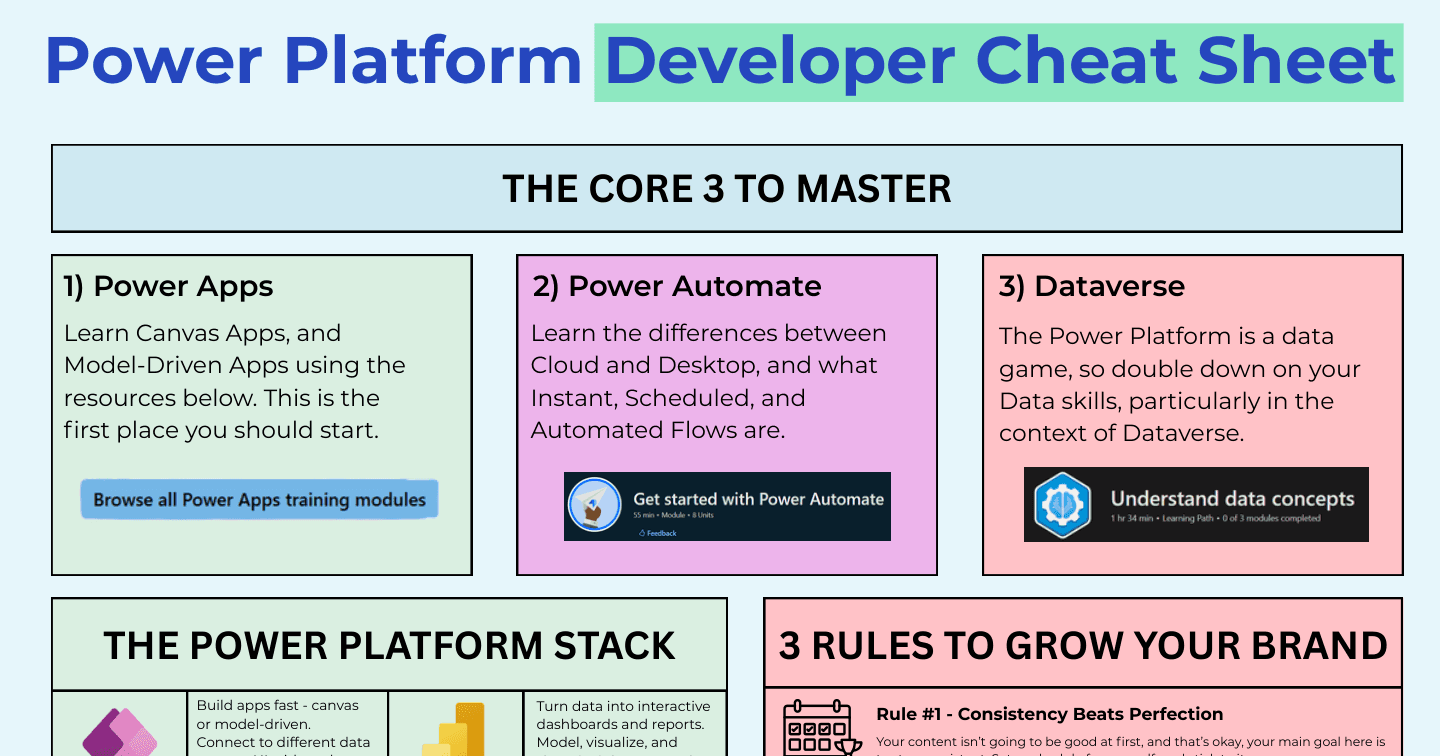
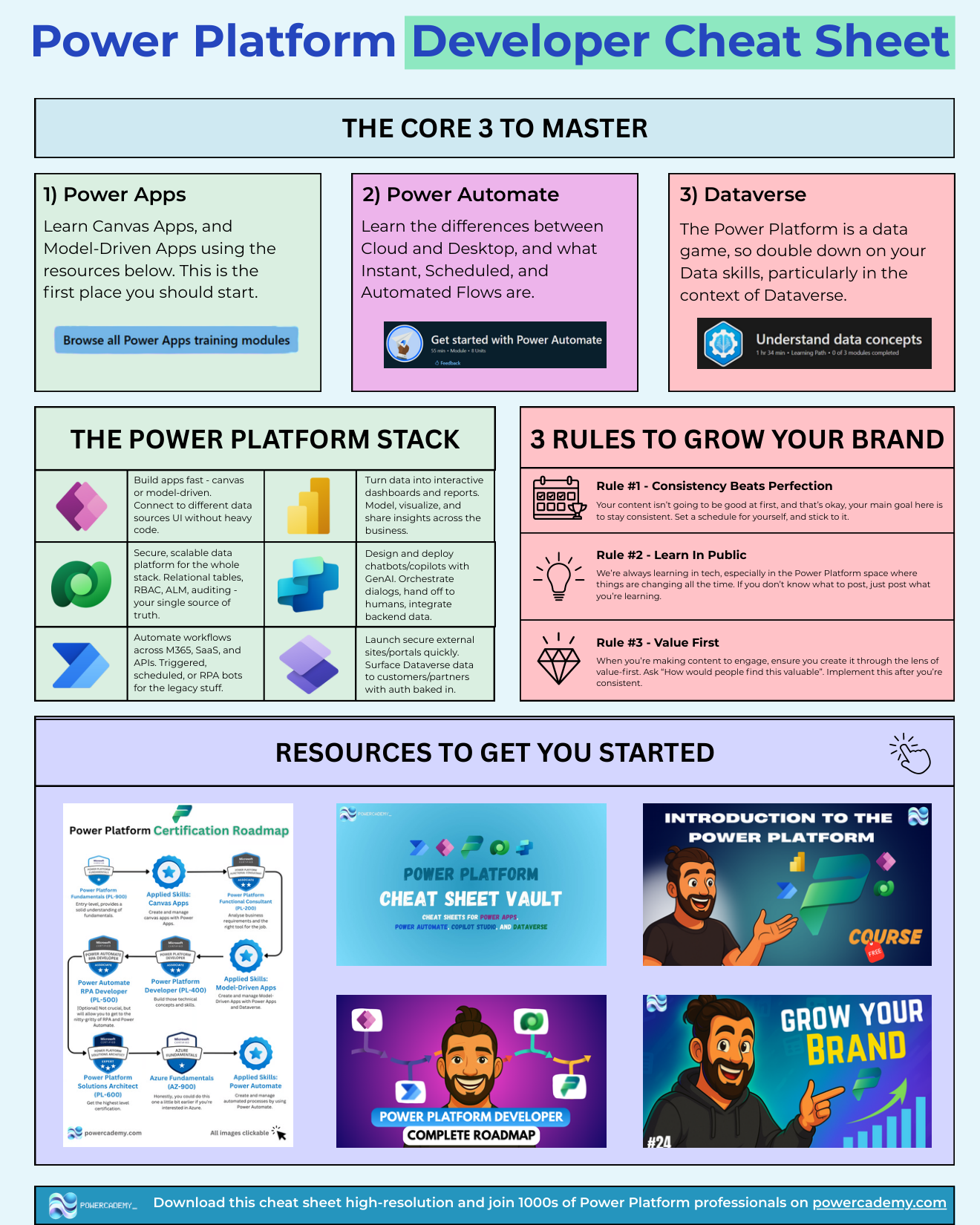
Every Power Platform developer needs three things: mastery of the Core 3, a mental map of the full stack, and a professional brand that gets them noticed. This cheat sheet puts all three on one page - what to learn first, how the products fit together, and the three rules for building a presence that opens doors.
Want the hi-res version? It's free in the Powercademy Success Kit.
What is the Core 3 every developer should master?
Power Apps - Learn canvas apps and model-driven apps. This is the first place to start: it teaches you the platform's building blocks while producing things you can show.
Power Automate - Learn the difference between cloud and desktop flows, and what instant, scheduled, and automated flows are each for.
Dataverse - The Power Platform is a data game, so double down on data skills in the context of Dataverse: tables, relationships, security, and business logic.
Together these three cover the majority of entry-level job descriptions, and every advanced skill on the platform - agents, ALM, pro-code - builds on top of them.
How does the wider Power Platform stack fit together?
Beyond the Core 3, the stack rounds out with Power BI turning your data into interactive dashboards and reports, Power Pages launching secure external portals that surface Dataverse data to customers and partners, and Copilot Studio designing and deploying agents with generative AI that orchestrate dialogs, hand off to humans, and integrate backend data. Dataverse sits underneath all of it as the secure, scalable single source of truth with relational tables, role-based access control, ALM support, and auditing.
What are the three rules for growing your brand?
Consistency beats perfection - Your content will not be good at first, and that is okay. Set a posting schedule and stick to it; the quality follows the reps.
Learn in public - We are always learning in tech, especially in a space that changes this fast. If you do not know what to post, post what you are learning.
Value first - Once you are consistent, create through the lens of value: ask how someone else would find this useful before you hit publish.
FAQ
Should I learn canvas or model-driven apps first?
Start with canvas to get comfortable with the maker experience, then move to model-driven apps as your Dataverse skills grow. Enterprise projects lean model-driven, so do not stop at canvas.
Why is a professional brand part of a developer cheat sheet?
Because in the Power Platform market, visibility converts directly into opportunities: roles, clients, and community recognition. Two developers with identical skills do not get identical offers - the one who shares their work gets found.
How long should I spend on the Core 3 before branching out?
Until you can build one end-to-end solution - an app, a flow, and a Dataverse model working together - without a tutorial. That usually takes a few months of consistent practice, and it is the moment the rest of the stack starts making sense.
Is Power BI required for a developer role?
Rarely as a core requirement, but a working knowledge helps because your solutions produce the data someone will want visualised. Being able to stand up a basic report makes you a more complete developer.
The hi-res version is in the Powercademy Success Kit - free, along with hundreds of other cheat sheets, roadmaps, and guides for Microsoft professionals.